

As a supplier of CAS 9041 - 08 - 1, I've spent a significant amount of time exploring its chemical properties and interactions. CAS 9041 - 08 - 1 is a compound that belongs to a specific class of chemicals, and understanding how it interacts with other substances is crucial for its various applications in different industries.
Chemical Structure and Reactivity
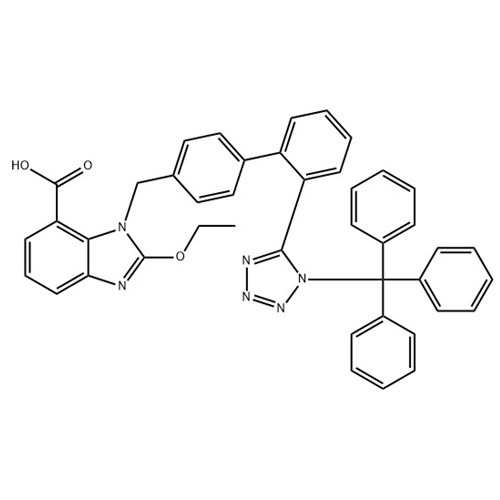
Before delving into its interactions with other chemicals, it's essential to understand the chemical structure of CAS 9041 - 08 - 1. The structure of a chemical often dictates its reactivity and the types of interactions it can have. CAS 9041 - 08 - 1 has a unique molecular arrangement that gives it specific functional groups. These functional groups are the sites where most chemical reactions occur.
One of the key factors influencing the reactivity of CAS 9041 - 08 - 1 is its electron density distribution. The atoms within the molecule have different electronegativities, which leads to the formation of polar bonds. These polar bonds can attract or repel other molecules based on their charge distribution. For example, if another chemical has a partial positive charge, it may be attracted to the regions of partial negative charge in CAS 9041 - 08 - 1, initiating an interaction.
Interactions with Organic Solvents
Organic solvents are commonly used in the handling and processing of chemicals. When CAS 9041 - 08 - 1 comes into contact with organic solvents such as ethanol, acetone, or toluene, several types of interactions can occur.
In the case of ethanol, which is a polar protic solvent, hydrogen bonding can take place between the functional groups of CAS 9041 - 08 - 1 and the hydroxyl group of ethanol. This hydrogen bonding can increase the solubility of CAS 9041 - 08 - 1 in ethanol. The polar nature of ethanol also allows for dipole - dipole interactions with the polar bonds in CAS 9041 - 08 - 1.
Acetone, on the other hand, is a polar aprotic solvent. It lacks a hydrogen atom bonded to an electronegative atom like oxygen, so it cannot form hydrogen bonds as readily as ethanol. However, it can still interact with CAS 9041 - 08 - 1 through dipole - dipole interactions. The carbonyl group in acetone has a significant dipole moment, which can interact with the polar regions of CAS 9041 - 08 - 1.

Toluene is a non - polar solvent. When CAS 9041 - 08 - 1 is mixed with toluene, the main interaction is the London dispersion forces. These forces are weak, temporary attractive forces that arise from the instantaneous dipoles formed due to the movement of electrons in the molecules. The solubility of CAS 9041 - 08 - 1 in toluene may be lower compared to polar solvents because the non - polar nature of toluene does not favor strong interactions with the polar regions of the compound.
Reactions with Inorganic Compounds
CAS 9041 - 08 - 1 can also interact with inorganic compounds. For instance, when it reacts with metal salts, such as sodium chloride or calcium carbonate, different outcomes are possible.
If CAS 9041 - 08 - 1 has functional groups that can act as ligands, it may form coordination complexes with metal ions. For example, if there are nitrogen or oxygen atoms with lone pairs of electrons in the molecule, they can donate these electrons to a metal ion, forming a coordinate covalent bond. This type of interaction can change the physical and chemical properties of both the metal salt and CAS 9041 - 08 - 1.
In the presence of strong acids or bases, CAS 9041 - 08 - 1 can undergo acid - base reactions. If it has basic functional groups, it will react with acids to form salts. Conversely, if it has acidic functional groups, it will react with bases. These reactions can be used to modify the compound or to purify it.
Interactions with Other Organic Compounds
When CAS 9041 - 08 - 1 encounters other organic compounds, a wide range of reactions can occur. For example, it may react with alkenes through addition reactions if it has appropriate functional groups. The double bond in an alkene can be attacked by a reactive species in CAS 9041 - 08 - 1, leading to the formation of a new compound.
It can also participate in condensation reactions with compounds that have reactive carbonyl groups. In a condensation reaction, two molecules combine with the elimination of a small molecule, such as water. This type of reaction can be used to synthesize larger, more complex organic compounds.
Impact on Industrial Applications
Understanding the interactions of CAS 9041 - 08 - 1 with other chemicals is of great importance in industrial applications. In the pharmaceutical industry, for example, these interactions can affect the stability and efficacy of drugs. If CAS 9041 - 08 - 1 is used as an intermediate in drug synthesis, its reactions with other chemicals during the manufacturing process need to be carefully controlled to ensure the quality of the final product.
In the polymer industry, the interactions of CAS 9041 - 08 - 1 with monomers can influence the polymerization process. It may act as an initiator, a catalyst, or a chain - terminating agent, depending on its reactivity with the monomers. This can have a significant impact on the properties of the resulting polymer, such as its molecular weight, branching, and mechanical strength.
Related Compounds and Their Interactions
There are several related compounds in the chemical market that may have similar or different interactions with other chemicals compared to CAS 9041 - 08 - 1. For example, Trityl Candesartan CAS#139481 - 72 - 4 is a compound used in the pharmaceutical industry. It may have different functional groups and reactivity patterns. Understanding how these compounds interact with other chemicals can provide valuable insights for researchers and manufacturers.
Another related compound is Tert - Butyl 2 - Bromoisobutyrate CAS 23877 - 12 - 5. It is commonly used in organic synthesis. Its interactions with other chemicals, such as nucleophiles or electrophiles, are different from those of CAS 9041 - 08 - 1 due to its unique structure.
L - Serine CAS# 56 - 45 - 1 is an amino acid. It has both acidic and basic functional groups, which allow it to participate in a variety of chemical reactions. Comparing its interactions with other chemicals to those of CAS 9041 - 08 - 1 can help in understanding the differences in reactivity between different classes of organic compounds.
Conclusion
In conclusion, the interactions of CAS 9041 - 08 - 1 with other chemicals are complex and diverse. They are influenced by factors such as its chemical structure, electron density distribution, and the nature of the other chemicals involved. These interactions have significant implications in various industries, from pharmaceuticals to polymers.
If you are interested in learning more about CAS 9041 - 08 - 1 or are looking to procure it for your industrial or research needs, I encourage you to reach out for a detailed discussion. Our team of experts can provide you with in - depth information about the product and its applications.
References
- Atkins, P., & de Paula, J. (2006). Physical Chemistry. Oxford University Press.
- McMurry, J. (2008). Organic Chemistry. Thomson Brooks/Cole.
- Housecroft, C. E., & Sharpe, A. G. (2008). Inorganic Chemistry. Pearson Education.