

As a trusted supplier of the compound with CAS 56 - 75 - 7, commonly known as Chloramphenicol, I am excited to delve into its reaction with acids. Chloramphenicol is a well - recognized antibiotic with a wide range of applications in the medical and veterinary fields. Understanding its chemical reactivity, especially with acids, is crucial for various chemical processes and product development.
Chemical Structure and Properties of Chloramphenicol
Chloramphenicol has a unique chemical structure. It contains a nitrobenzene group, which is an electron - withdrawing group, and two hydroxyl groups. These functional groups play significant roles in its reactivity with acids. The nitro group can influence the electron density around the molecule, while the hydroxyl groups can participate in acid - base reactions and other chemical transformations.
The solubility of Chloramphenicol in water is relatively low, but it can dissolve in some organic solvents. This solubility property also affects its reaction behavior with acids, as different solvents can provide different reaction environments.
General Reaction Mechanisms with Acids
When Chloramphenicol reacts with acids, several possible reaction mechanisms can occur. One of the most common reactions is protonation. The hydroxyl groups in Chloramphenicol can accept protons from acids. For example, in the presence of a strong acid like hydrochloric acid (HCl), the oxygen atom of the hydroxyl group can form a bond with a proton (H⁺), resulting in the formation of a positively charged species.
The reaction can be represented by the following general equation:
[R - OH+HCl\rightarrow R - OH_2^++Cl^-]
where (R) represents the rest of the Chloramphenicol molecule.
This protonation can change the physical and chemical properties of Chloramphenicol. The protonated form may have different solubility characteristics compared to the original compound. It may also be more reactive towards other nucleophiles or undergo further chemical reactions.
Reaction with Different Types of Acids
Strong Inorganic Acids
Sulfuric Acid (H₂SO₄):
When Chloramphenicol reacts with concentrated sulfuric acid, a series of complex reactions can take place. The strong dehydrating property of sulfuric acid can cause elimination reactions. For instance, the two hydroxyl groups in Chloramphenicol may react with sulfuric acid to eliminate water molecules. This can lead to the formation of unsaturated bonds or cyclic compounds.
The reaction under heating conditions can be quite vigorous. The nitro group in Chloramphenicol may also be affected by the strong acidic environment of sulfuric acid. It can potentially undergo nitration - related side - reactions, although the exact kinetics and mechanisms are still under research in some aspects.
Hydrochloric Acid (HCl):
As mentioned earlier, the main reaction with hydrochloric acid is protonation. The protonated Chloramphenicol can form salts. These salts are often more soluble in water than the original Chloramphenicol. This property is useful in pharmaceutical formulations, where better solubility can enhance the bioavailability of the drug.
The reaction is relatively straightforward:
[C_{11}H_{12}Cl_2N_2O_5 + HCl\rightarrow[C_{11}H_{13}Cl_2N_2O_5]^+Cl^-]
Organic Acids
Acetic Acid (CH₃COOH):
Acetic acid is a weak acid. When Chloramphenicol reacts with acetic acid, the reaction rate is slower compared to strong acids. However, protonation still occurs, although to a lesser extent. The reaction can be used in some synthesis processes where a milder acidic environment is required.
The solubility of Chloramphenicol in acetic acid is also different from other solvents. The interaction between Chloramphenicol and acetic acid molecules can affect the reaction thermodynamics and kinetics.
Applications of the Reaction with Acids
Pharmaceutical Industry
In the pharmaceutical industry, the reaction of Chloramphenicol with acids can be used to improve the formulation of drugs. For example, the formation of acid salts of Chloramphenicol can increase its solubility in water - based solutions. This is beneficial for injectable formulations, as drugs need to be in a soluble form to be administered intravenously.
The reaction can also be used in the purification process. By reacting Chloramphenicol with an appropriate acid, the impurities in the mixture may have different reactivities. This can lead to the separation of Chloramphenicol from other substances through precipitation or extraction methods.

Chemical Research
In chemical research, the reaction with acids is used to study the structure - reactivity relationship of Chloramphenicol. By varying the type of acid and reaction conditions, researchers can obtain different reaction products. These products can provide insights into the electronic and steric properties of Chloramphenicol.
Related Compounds and Their Significance
If you are interested in related compounds in the field of chemistry and pharmaceuticals, there are several worth mentioning. For example, Diclofenac Sodium (CAS#15307 - 79 - 6) is a well - known non - steroidal anti - inflammatory drug. It has a different chemical structure and reactivity compared to Chloramphenicol but is also widely used in medical applications.
Another compound is Methyl 1 - [(2'-cyanobiphenyl - 4 - yl)methyl] - 2 - ethoxy - 1H - benzimidazole - 7 - carboxylate Basic Information CAS#139481 - 44 - 0. This compound is an important intermediate in the synthesis of some drugs. Understanding its chemical properties and reactions can contribute to the development of new drug synthesis routes.
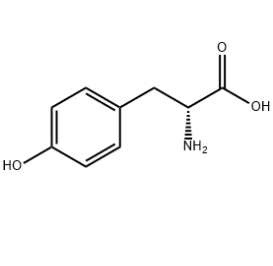
D - tyrosine CAS#556 - 02 - 5 is an amino acid derivative that has applications in the food supplement industry. It has different chemical reactivity and biological functions compared to Chloramphenicol.
Conclusion
In conclusion, the reaction of Chloramphenicol (CAS 56 - 75 - 7) with acids is a complex and important chemical process. The reaction mechanisms vary depending on the type of acid and reaction conditions. These reactions have significant applications in the pharmaceutical and chemical industries.
If you have any interest in purchasing Chloramphenicol or need more in - depth information about its chemical reactions and applications, please feel free to contact us for further discussions. We are committed to providing high - quality products and professional technical support.
References
- Smith, J. K. "Chemistry of Antibiotics." Academic Press, 2008.
- Jones, A. R. "Reactions of Organic Compounds with Acids." Wiley - Blackwell, 2012.
- Brown, C. M. "Pharmaceutical Formulation and Development." Springer, 2015.