

As a supplier of chloramphenicol and chloromycetin, I've witnessed firsthand the importance of understanding how storage time affects these crucial pharmaceutical products. Chloramphenicol and chloromycetin, which are essentially the same compound (chloromycetin is the brand - name for chloramphenicol), have been used for decades in the medical field due to their broad - spectrum antibacterial properties. However, their efficacy and safety can be significantly influenced by the duration and conditions of storage.
Chemical Structure and Stability Basics
Chloramphenicol has a relatively simple chemical structure, consisting of a nitrobenzene ring attached to a dichloroacetyl group and an amino - alcohol side chain. This structure is susceptible to various chemical reactions over time, especially in the presence of factors such as heat, light, and moisture.
The stability of chloramphenicol is mainly determined by its chemical bonds. The nitro group in the molecule can be reduced under certain conditions, and the amide and ester linkages can undergo hydrolysis. Hydrolysis is a common reaction that can occur when chloramphenicol is exposed to water. This reaction breaks the chemical bonds in the molecule, leading to the formation of degradation products.
Impact of Storage Time on Physical Properties
Over an extended storage period, chloramphenicol and chloromycetin may experience changes in their physical properties. One of the most noticeable changes is the alteration in color. Freshly manufactured chloramphenicol is usually a white or slightly yellowish crystalline powder. However, as it ages, especially when stored in inappropriate conditions, it may turn darker. This color change is often an indication of chemical degradation.
The solubility of chloramphenicol can also be affected by storage time. In its pure and stable form, chloramphenicol has a certain solubility in water and organic solvents. But as degradation products accumulate, the solubility may decrease. This can be a significant issue in pharmaceutical formulations, as a change in solubility can affect the bioavailability of the drug. For example, if a liquid formulation of chloramphenicol becomes less soluble over time, it may lead to the formation of precipitates, which can clog injection needles or cause uneven dosing.
Impact of Storage Time on Chemical Properties
Chemically, the most significant change in chloramphenicol over storage time is the formation of degradation products. As mentioned earlier, hydrolysis is a major degradation pathway. When the amide and ester bonds in chloramphenicol are hydrolyzed, it can form compounds such as p - nitrobenzaldehyde and dichloroacetic acid. These degradation products not only reduce the concentration of the active ingredient but may also have different pharmacological properties.
Some of the degradation products may be toxic or have adverse effects on the human body. For instance, p - nitrobenzaldehyde can cause irritation to the skin, eyes, and respiratory tract. Therefore, the presence of these degradation products in a chloramphenicol product can pose a serious safety risk.

The potency of chloramphenicol also decreases with storage time. The antibacterial activity of the drug is directly related to the concentration of the active ingredient. As chloramphenicol degrades, the amount of the effective antibacterial compound decreases, resulting in a reduced ability to inhibit the growth of bacteria. This means that a product that was initially effective in treating a bacterial infection may become less effective or even ineffective after a long - term storage.
Influence of Storage Conditions
The rate at which chloramphenicol and chloromycetin are affected by storage time is highly dependent on the storage conditions. Temperature is one of the most critical factors. High temperatures can accelerate the chemical reactions that lead to degradation. For example, storing chloramphenicol at room temperature (around 25°C) for a few months may cause some degree of degradation, but storing it at 40°C or higher can significantly speed up the process.
Light can also have a negative impact on the stability of chloramphenicol. Ultraviolet (UV) light, in particular, can initiate photochemical reactions in the molecule. These reactions can break chemical bonds and lead to the formation of free radicals, which further promote degradation. Therefore, chloramphenicol products are often recommended to be stored in dark containers to protect them from light.
Moisture is another important factor. Even a small amount of water can trigger hydrolysis reactions in chloramphenicol. Products stored in humid environments are more likely to degrade than those stored in dry conditions. This is why proper packaging, such as using moisture - resistant containers, is crucial for the long - term storage of chloramphenicol.
Quality Control and Storage Recommendations
As a supplier, we take strict quality control measures to ensure the stability of our chloramphenicol and chloromycetin products. We conduct regular stability testing to monitor the changes in physical and chemical properties over time. These tests include high - performance liquid chromatography (HPLC) to analyze the concentration of the active ingredient and the presence of degradation products, as well as visual inspections to check for color and physical changes.
Based on our experience and scientific research, we recommend storing chloramphenicol and chloromycetin at a temperature between 2 - 8°C in a dry and dark place. This can significantly slow down the degradation process and extend the shelf - life of the products. Additionally, we use high - quality packaging materials that are resistant to moisture and light to protect the products during storage and transportation.
Related Products and Their Stability
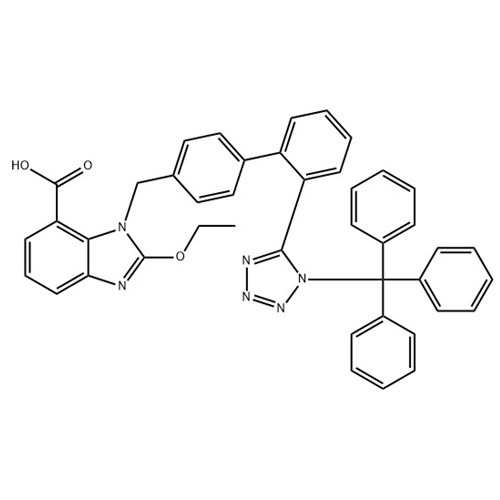
In addition to chloramphenicol and chloromycetin, we also supply other pharmaceutical intermediates and active pharmaceutical ingredients, such as Trityl Candesartan CAS#139481 - 72 - 4, Trityl Olmesartan CAS#144690 - 92 - 6, and Gatifloxacin Mesylate CAS#316819 - 28 - 0. Each of these products has its own stability characteristics and storage requirements.
Trityl Candesartan and Trityl Olmesartan are important intermediates in the synthesis of antihypertensive drugs. They are relatively stable under proper storage conditions, but like chloramphenicol, they can also be affected by factors such as temperature, light, and moisture. Gatifloxacin Mesylate is an active pharmaceutical ingredient used in the treatment of bacterial infections. Its stability is also crucial for ensuring its efficacy and safety.
Conclusion
In conclusion, storage time has a significant impact on the physical and chemical properties of chloramphenicol and chloromycetin. The degradation of these products over time can lead to changes in color, solubility, chemical composition, and potency, which in turn can affect their efficacy and safety. As a responsible supplier, we are committed to providing high - quality products by implementing strict quality control measures and following proper storage recommendations.
If you are interested in purchasing chloramphenicol, chloromycetin, or any of our other pharmaceutical products, we invite you to contact us for more information and to initiate a procurement discussion. We can provide you with detailed product specifications, stability data, and pricing information to meet your specific needs.
References
- Rowe, R. C., Sheskey, P. J., & Quinn, M. E. (Eds.). (2009). Handbook of Pharmaceutical Excipients. Pharmaceutical Press.
- Lachman, L., Lieberman, H. A., & Kanig, J. L. (Eds.). (1986). The Theory and Practice of Industrial Pharmacy. Lea & Febiger.
- Stella, V. J., & He, Y. (2008). Stability of drugs and dosage forms. In Encyclopedia of Pharmaceutical Technology (pp. 1 - 16). Informa Healthcare.