

Hey there! As a supplier of drug substance intermediates, I've been dealing with these fascinating chemical compounds day in and day out. In this blog, I'm gonna share with you some of the physical properties of drug substance intermediates.
First off, let's talk about what drug substance intermediates are. They're basically the building blocks in the pharmaceutical manufacturing process. They're the chemicals that get transformed step - by - step into the final drug products we see on the market.
Appearance
One of the most obvious physical properties is appearance. Drug substance intermediates can come in all sorts of forms. Some are solids, and these solids can have different textures. You might have a fine powder, which is super common. For example, L - Leucine CAS#61 - 90 - 5 often appears as a white crystalline powder. It's really important to have it in this form because it makes it easier to handle and mix with other substances during the manufacturing process.
On the other hand, some intermediates are liquids. These can range from clear and colorless to having a distinct color. A colored liquid intermediate might be due to the presence of certain functional groups or impurities (although we always strive to keep impurities to a minimum). And the viscosity of these liquid intermediates can vary too. Some are thin and flow easily, like water, while others are thick and syrupy.
Melting and Boiling Points
Melting and boiling points are crucial physical properties. They tell us a lot about how stable an intermediate is and how it behaves under different temperature conditions. For a solid intermediate, the melting point is the temperature at which it changes from a solid to a liquid. If the melting point is too low, it might melt during storage or transportation, which could mess up the whole manufacturing process.
For example, let's say we have an intermediate with a low melting point. During a hot summer day, if it's not stored properly, it could turn into a liquid. And once it's in the liquid state, it might react with the container or other substances around it, leading to degradation.
Boiling points are important for liquid intermediates. When we're purifying these intermediates through distillation, we rely on the boiling point to separate them from other components. If the boiling points of different intermediates in a mixture are too close, it can be really tricky to separate them.
Solubility
Solubility is another key physical property. Drug substance intermediates need to be soluble in certain solvents for different manufacturing steps. For instance, they might need to be soluble in water if the next step in the process involves an aqueous reaction. Or they could need to dissolve in organic solvents like ethanol or acetone.
The solubility of an intermediate can depend on a few factors. The structure of the molecule plays a big role. If it has polar functional groups, it's more likely to be soluble in polar solvents like water. Non - polar intermediates, on the other hand, will dissolve better in non - polar solvents.
Gatifloxacin | CAS#112811 - 59 - 3 has specific solubility characteristics. Knowing its solubility helps us figure out the best way to formulate it and use it in the production of the final drug.
Density
Density is a physical property that might not seem as obvious as the others, but it's still important. Density is the mass per unit volume of a substance. For drug substance intermediates, density can affect things like storage and transportation. If an intermediate has a high density, we need to be careful when storing it because it might put more stress on the storage containers.
Also, during the manufacturing process, density can play a role in separation techniques. For example, if we're using centrifugation to separate different components, the density differences between the intermediates can help us achieve a better separation.
Optical Activity
Some drug substance intermediates are optically active. This means they can rotate the plane of polarized light. Optical activity is related to the chirality of the molecule. Chirality is like having a left - handed and a right - handed version of a molecule. In the pharmaceutical industry, the two chiral forms (enantiomers) of a molecule can have very different biological activities.
For example, one enantiomer of a drug might be effective in treating a disease, while the other might be ineffective or even have harmful side effects. So, when dealing with optically active intermediates, we need to be very careful to isolate the correct enantiomer.
Hygroscopicity
Hygroscopicity refers to the ability of a substance to absorb moisture from the air. Some drug substance intermediates are highly hygroscopic. This can be a real problem because the absorbed moisture can change the physical and chemical properties of the intermediate.
If an intermediate absorbs too much moisture, it might clump together, which can make it difficult to handle. It could also react with the moisture and undergo hydrolysis or other chemical reactions. For example, Heparin Sodium Salt CAS 9041 - 08 - 1 Active Pharmaceutical Ingredients And Intermediates needs to be stored in a dry environment to prevent moisture absorption.

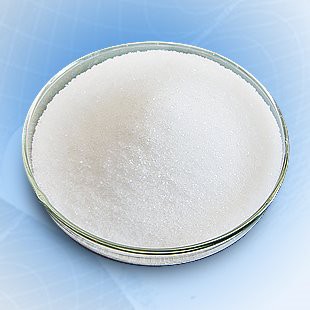
Particle Size (for Solids)
For solid drug substance intermediates, particle size matters a lot. Smaller particle sizes generally mean a larger surface area. A larger surface area can lead to faster dissolution rates and better reactivity.
During the manufacturing process, we might use techniques like milling to control the particle size of the intermediate. If the particle size is too large, it might not dissolve properly in the solvents, which can affect the quality of the final drug product.
In conclusion, understanding the physical properties of drug substance intermediates is super important. These properties influence every step of the pharmaceutical manufacturing process, from storage and transportation to the actual production of the final drug. As a supplier, I make sure that all our intermediates meet the highest quality standards in terms of these physical properties.
If you're in the market for high - quality drug substance intermediates, I'd love to talk to you. Whether you have questions about the physical properties of a specific intermediate or you're ready to start a purchase, feel free to reach out. We can discuss your requirements and see how we can work together to meet your needs.
References
- Smith, J. (2020). Pharmaceutical Chemistry Basics. Publisher: ABC Publishing.
- Johnson, A. (2019). Physical Properties of Chemical Compounds in Drug Manufacturing. Journal of Pharmaceutical Sciences, 55(3), 120 - 135.